Thursday, October 14, 2010

First Time in New Guinea


First Time in New Guinea
Nicholas Frey

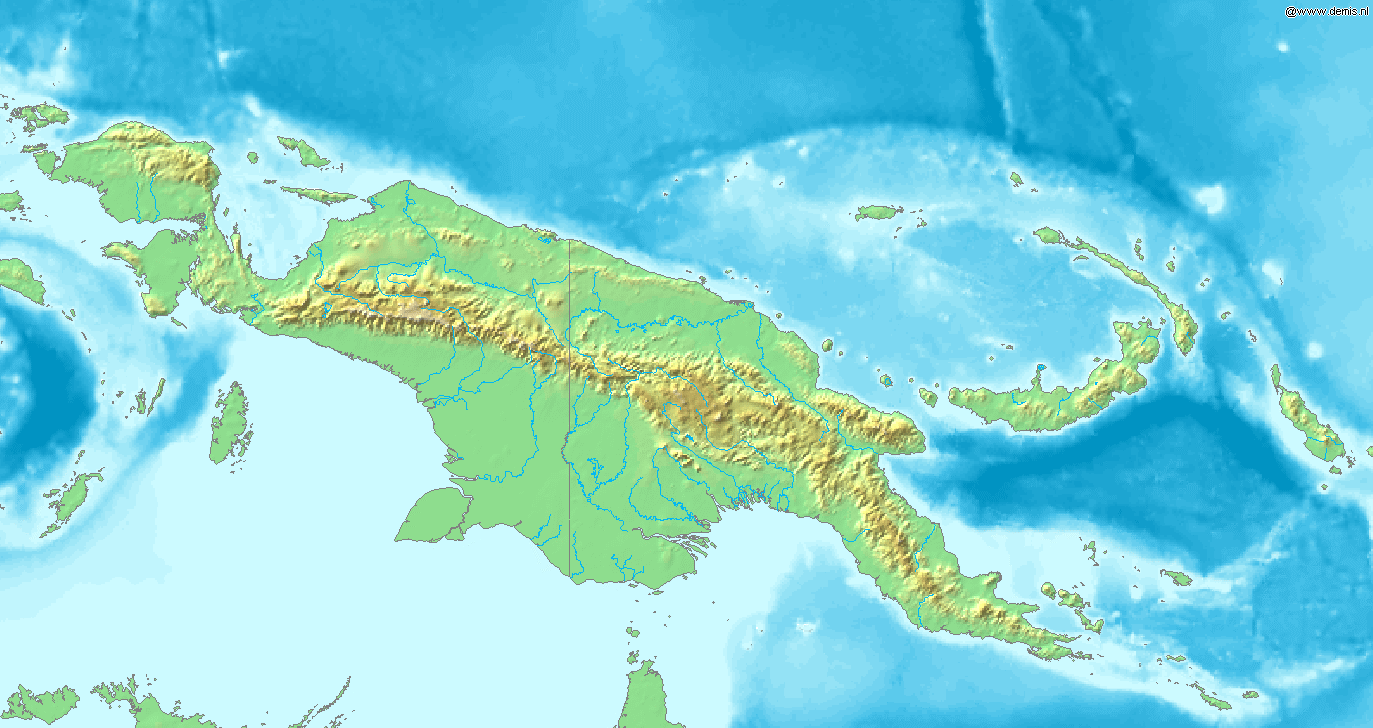
Due to the growing population of humans, humans are forced to spread out and claim new wild land. These new lands are all over the globe; one of these new lands was New Guinea. Findings have shown that humans first settled in New Guinea about 43,000 years ago (Gosden 2010). Chris Gosden from Oxford University writes a paper on facts that give an estimate of when humans first settle in New Guinea.

Archeologists have found evidence in the highlands of New Guinea of some settlements to prove humans were there. Settlements are still a reach for some people because they believe that the first people who came only stayed for a little bit then left because of the colder climate (Gosden 2010). The highlands where the evidence was found is about 8 degrees above the equator and 2000 meters above sea level. Even being this close to the equator, paleontologists believe that the environment of the highlands would have caused difficulties to the travelers (Gosden 2010). Over time the travelers have settled into the area and have adjusted to the climate.

Archeologists guess that the people who first arrived and all those that arrived shortly after had arrived in very early designed boats. They traveled across the sea to the shores of New Guinea (Gosden 2010). Evidence also shows that the travelers brought over edible plants and introduced new animals (Gosden 2010). With this they transferred the harsh land into a more hospitable living environment for them.

Chris Gosden writes that archeologists have found evidence of ways the humans transformed the land around them to make the land more hospitable for them. This evidence is seen through the tools that were found. These large tools are presumed to be able to cut and clear trees and brush to be able to farm on (Gosden 2010). The travelers brought over new plants to New Guinea’s ecosystem so they could help themselves sustain life (Gosden 2010). Also Chris Gosden included that the early habitants introduced new animals into the ecosystem of New Guinea. Theses animals were rodents such as wallabies and rats (Gosden 2010). Chris Gosden informs the reader that these rodents were introduced into an ecosystem that lacked in animal protein. Even though the travelers probably didn’t know that in order to help your body stay strong, living things need to require protein. Introducing these rodents helped the travelers indirectly achieve a diet that allowed them to live and sustain themselves in that area.

The areas where the archeologists have found the remains of the settlements were located in the highlands (Gosden 2010). The majority of New Guinea’s current day population still resides in the highlands, states Chris Gosden. Also in this area is where the majority of the farming lands are located (Gosden 2010). This shows that the original settlers and their descendents have not moved or that another group found that area after and settled there because of the location.

When the settlers landed on the shores of New Guinea the land was uninhabited, so they first of all had to find food. Gosden mentions that the archeologists guessed that when the first people arrived on New Guinea, New Guinea had a much different ecosystem. Therefore the first people had eaten more yams or pandanus, which is a starchy fruit, found in the lower altitude. Chris Gosden suggests that the first inhabitants of New Guinea had excellent survival skills. The basis of Chris Gosden’s thought of the survival skill comes from the inhospitable environment that New Guinea was before humans came and started to live there. These skills include the ability to map the area, the ability to remember different key things to help them stay alive and navigate and the courage to experiment or dare to try new foods that might just be poisonous. With this the travelers have overcome the terrain to make it possible to live and grow as a population there.

Archeologists have guessed that the first explores arrived around 43,000 years ago in New Guinea (Gosden 2010). With this it shows that humans have the ability to reside anywhere in the world. This is also proving that humans could potentially expand past the Earth to the moon, or even other planets or man-made devices that they could live on. Humans have amazing potential.

Reference
Gosden, Chris. "When Humans Arrived in the New Guinea Highlands." 330.6000 (2010): 41-42. Web. 10 Oct 2010. .

Canada Rejoins the IATTC

The Inter-American Tropical Tuna Commission, IATTC, is a fisheries organization dedicated towards the conservation of tuna populations and other marine organisms caught or disrupted by tuna-fishing vessels. The commission focuses on the Eastern Pacific Ocean and is divided by regional management. Each country associated with the IATTC monitors the waters where they tuna-fish, and collaborates the information they obtain to gain an overall understanding of data and progress.

The IATTC originally established in 1950, and Canada was a previous member between 1968 and 1984. Canada has recently rejoined the IATTC in August after a 26 year separation from the commission. Today, there are currently 20 countries associated as members of the Inter-American Tropical Tuna Commission. Each country has a specific role in the development and conservation actions of the IATTC, especially Canada. As a major harvester and exporter in the fishing industry, Canada has the potential to contribute greatly towards the IATTC’s current and future goals.

The Inter-American Tropical Tuna Commission is comprised of two programs, the Tuna-Bluefish Program and the Tuna-Dolphin Program. The Tuna-Bluefish Program is devoted to understanding the biology of tuna and other fish species. The study of the fish’s biology is needed to understand reproduction rates, aquatic habitats, food source, etc. This information is essential for recognizing the appropriate conservation measures to take so that the sustainable levels of the tuna and other species will be maximized. The IATTC realizes the devastating effects of overfishing and, as a result, works to sustain fish populations while taking into account maximum harvest revenue. The Tuna-Dolphin Program is committed to recording dolphin populations and understanding dolphin deaths due to fishing practices. Long-lining is an example of a detrimental fishing practice towards marine ecosystems, due to the unpredictability of the catch and its chance of survival. The IATTC recognizes the harm in fishing practices such as this and, therefore, encourages safe fishing techniques that will limit, and hopefully end, dolphin mortality numbers.

On top of the Tuna-Dolphin Program, the IATTC is also associated with the International Dolphin Conservation Program. The goals of each program are significantly similar as they strongly work towards decreasing secondary dolphin mortalities to figures close to zero. Along with deaths due to fishing vessels, dolphins are threatened by many hunting and capturing practices by other countries around the world. By greatly reducing the number of dolphins killed by tuna-fishing vessels, the IATTC and the International Dolphin Conservation Program is eliminating an unnecessary threat for the dolphin species. With this threat out of the picture, the IATTC is giving the dolphins a chance to flourish and regenerate populations, while reducing additional degradation to this amazing species.

The IATTC also accepted the international ban on shark finning in 2005. The practice of shark finning is even more gruesome than it may seem. Often when a shark finning vessel catches a shark they will slice off every fin while the shark is still alive and dump the suffering body back into the water as waste. With open wounds and no source of swimming abilities, the shark is bound to have a slow and painful death. This demand for shark fins is abundant in the Chinese culture. The shark fins are used to make shark fin soup, that actually has no taste (only texture), which is a high status symbol in China. Another exploitation of sharks is for their cartilage, which is said to have healing powers for many illnesses, including cancer. The reality is many of these sharks are endangered, such as the hammer head and leopard shark, and a decline in shark populations can have tremendous negative effects on the world’s environment. These negative effects include a decrease in atmospheric oxygen as sharks help to control fish populations that consume microorganisms
responsible for producing a large amount of the oxygen we breathe. By banning shark finning, the IATTC is making a great contribution towards helping shark population’s regenerate in the Eastern Pacific Ocean. These laws and regulations implemented towards abolishing unnecessary aquatic mortalities will only have positive outcomes for marine and land ecosystems.

Canada’s re-introduction into the Inter-American Tropical Tuna Commission resembles significant contributions that will be put forth to accompany the commissions goals and current regulations. It makes perfect sense for Canada to be apart of the IATTC for a number of reasons. Firstly, the Canadian tuna fishing industry is large and continuously growing, allowing for an enhanced record of tuna and related species catches and biological information. Canada’s accessibility of advanced technology is useful for more in-depth understanding on the biology of tuna and other marine organisms. As apart of the IATTC, Canada will focus on albacore tuna harvesting and populations in the North Pacific. As a country, the dedication towards laws and improvement for a healthy planet establishes Canada as a perfect candidate for shark and dolphin protection, as well as appropriate fishing laws and practices for a number of species. Canada’s input with the IATTC will most definitely have a positive impact on both the commission, and the overall quality of life for multiple organisms.

By: Tyler Blauel

Article: http://www.dfo-mpo.gc.ca/international/dip-iattc-citt-eng.htm

References:

Canada and the Inter-American Tropical Tuna Commission. (n.d.). Welcome Page | Page d'accueil. Retrieved October 12, 2010, from http://www.dfo-mpo.gc.ca/international/dip-iattc-citt-eng.htm

ENDANGERED SHARK . (n.d.). ENDANGERED SHARK . Retrieved October 12, 2010, from http://www.endangeredshark.com/

Inter-American-Tropical-Tuna-Commission. (n.d.). Inter-American-Tropical-Tuna-Commission. Retrieved October 12, 2010, from http://www.iattc.org/HomeENG.h

Glaciers Shield Southern Andes from Erosion

Mountain glaciers appeared 3 million to 5 millions years ago in response to the earth’s cooling climate. Through erosions, these glaciers are responsible for shaping many of the world’s mountains into the jagged morphology they now possess. However, a study conducted by Thomson and co-authors provides evidence that glaciers on the Southernmost region of the Patagonian Andes has protected these mountains from erosion which has lead to a widening of the mountain belt. Ultimately this study has evidence to support the theory that the shape and dynamics of mountain belts are determined by climate, including erosion or lack thereof.

The Earth’s upper crust behaves as a frictional material in which its resistance to deformation increases with pressure. Under these circumstances, the balance between surface erosion and the rate at which continents collide determines the height and width of mountain belts. According to this theory, all mountain belts should have a steady state in which the rate of surface erosion is balanced by the rate of continental collision. When the rate of one of these processes changes, the mountain belt responds mechanically. In the figure below, a: Northern Patagonia’s mountain belt is narrower due to the enhanced erosion efficiency caused by fast flowing (melting and moving) glaciers. In b: Southern Patagonia, the climate is colder which causes the glaciers to be frozen to the bedrock. The result of this is a widening of the mountain belt and reduced erosion.

467281b_F1.html.jpg

The most common piece of evidence that climate, through erosion, dictates mountain height is a measure called the mountain glacier equilibrium line altitude (ETA), as applied to the Andes. The ELA is the altitude at which snow accumulation is balanced perfectly by ice loss. However, in the southern Patagonian Andes, this correlation does not apply. In order to get a clearer understanding of this anomaly, Thomson and co-authors conducted experiments and documented the erosional history of the Patagonian Andes by low temperature thermochronology. This involved collecting rock samples from this region and dating them using several methods to obtain the time and rate at which the rock samples cooled on their way to the surface. The experiment showed that the southernmost samples were older then the others, indicating that they have been eroding more slowly. Thomson et al. also noted that the mountain belt in the Northern Andes is narrow. Whereas in the Southern regions, where the authors observe a reduced erosion rate from 5 millions years ago, the zone of active deformation widened over the same time interval. This experiment revealed the correlation between erosion and mountain belt width.

The results of this experiment also proved that under extremely cold climatic conditions, mountain glaciers do not slide, they stay frozen to the bedrock and protect mountain peaks rather than erode them. Overall, this study demonstrates a connection between erosional conditions and the morphology of the Andes. Also it showed that the effect of glaciers on topography is dependent on temperature and climatic conditions.

Thomson and colleagues’ experiment opens new portals to improve our understanding of mountain belts and the effects that erosion and climate have on them. Using the results from this experiment, we now need to re-evaluate how and when a mountain belt may enter a ‘runaway’ scenario. A ‘runaway’ scenario is one in which increasing peak heights lead to extensive glaciated areas where ice is frozen to bedrock, significantly decreasing erosion rate. The new evidence will also bring up debates on erosional efficiency and how it controls the growth and morphology of mountain belts. Not only did this experiment relate the rate of erosion on mountain belt height and width, but it also went further to demonstrate that at extremely cold conditions, ice sheets can freeze to the bedrock of a mountain (such as the Southern Patagonian Andes), reducing its rate of erosion.

Link to article: http://www.nature.com/nature/journal/v467/n7313/full/nature09365.html

Reference:

Thomson, S. N., Brandon, M. T., Tomkin, J. H., Reiners, P. W., Vasquez, C., Wilson, N. J. (2010). Glaciation as a destrutive and constructive control on mountain building. Nature: International weekly journal of science, 467, 313-317.

Climate Change Viscously Impacting South-Eastern Australia

For the past decade the earth has undergone extreme climatic changes producing many serious repercussions on the earth’s biosphere. Specifically, South-eastern Australia experienced many ramifications. The Australian Journal of Earth Science explores the effects anthropogenic climate change has taken upon the continent of Australia.

One of the major problems that the journal explains is that “there have been significant decreases in precipitation over much of the eastern and southern parts of Australia”. This is a grave concern because the ground water has recently become a main source for domestic water supply, irrigation, and industrial purposes. Not only is climate change taking a toll on the groundwater in Australia, but it is also threatening the region with pollution and the changes made to the land for incatchments.

It is predicted that rainfall will continue to decline. The journal states this as “a documented decrease over recent decades in the number of rain-bearing cyclonic systems to the south of Australia”. This problem is suspected to cause “extreme changes to recharge rates and to the hydrogeological systems” in the near future. This change in the recharge rate will slow down the amount of ground water that will be replenishing over time; in turn, negatively affecting the hydrogeological systems of South-eastern Australia. If rainfall sufficiently decreases in South Australia, the recharge will increase due to the vegetation scarcity, causing the groundwater to become less saline. The decreased salinity will result in a deficiency of the water.

Although it seems that climate change will continue to negatively impact the hydrogeology of Australia, it is uncertain if these effects may be in fact counteracted by the other changes that climate change has caused. For example, the journal suggests that it is possible that vegetative response to climate change may increase groundwater levels. “Decrease in vegetation cover due to increasing aridity, for example, net transpiration rates will be reduced, and net recharge as a percentage of rainfall may increase.” Such an effect will also increase absolute charge. Though, this is merely a suggestion made in the journal and no real evidence has been collected to support it.

From the data collected, as presented within the journal, there is clear and sufficient evidence that proves the negative impact that anthropogenic climate change has on the South-Eastern part of Australia. However, for the reason that there is still uncertainty of the future’s outcome of Australia’s groundwater, more research is needed to be done to determine all the long-term effects.


Cited Works:
Cartwright, I., and Simmond, I. “Impact of changing climate and land use on the hydrogeology of southeast Australia.” Australian Journal of Earth Sciences 55 (2008): 1009–1021. Web. 14 Oct. 2010

Nitrous Oxide emissions formed by the Ohio River

Blog Assignment 2
Pascal Tuarze
To General Public
ENVS*1020 F10 (01-06)
14/10/2010


Nitrous Oxide formed in the Ohio River

Introduction

In my blog I will be explaining the research being done on the emissions of N2O, or nitrous oxide, of the Ohio River into the atmosphere. It is well known that nitrous oxide is a greenhouse gas and a major contributor to the destruction of the ozone layer. N2O is formed naturally in the oceans and tropical soil but research has shown that a great quantity of N2O is being formed when runoff and sewage inputs nitrogen into river systems. This is then converted biologically into N20 in both the sediment and water column of the river.


What is happening?

A great quantity of waste water is being pumped into the Ohio River by the sewage plants of Cincinnati. The waste water is then being transformed from nitrogen to N2O by nitrifying bacteria found in the waste water. These bacteria are also stimulated by the (NH4)+ found in the waste water which catalyzes the reaction, creating nitrous oxide more quickly.

“The three highest rates co-occurred with high NH4+ concentration (figure 4C) and N2O emission rates (figure 4B) downstream of the WWTP outfall. Nitrous oxide production in WWTP effluent (1.01 μgN2O-NL-1) exceeded the highest rate observed in the river by a factor of 49.” (report 1)

The researchers found that the production of N2O in the water column almost doubles that produced by the sediments. They also found that production of N2O in the Ohio River is strongly correlated to the season or temperature of the water and perhaps even the concentration of CO3-. The highest rates of emissions were observed in the summer months when there was a very high temperature but a very low concentration of NO3-. The lowest rate of emission was during winter when the temperature was very low and had a high concentration of CO3-.


Research:

The researchers conducted experiments over a period of 13 months between the summers of 2008-2009 in the Markland Pool of the Ohio River. The study consisted of four sample types. The first sample type was to find the concentration of N2O and other nutrients in the top 5 centimetres of water. In the second they measured sediment production rates and found which nutrients limited the production of N2O. The third was water chemistry and the last was the measurements of the production of N2O in the water column and emissions from the surface. With all this data they were trying to find the pattern of how much N2O is produced in large rivers such as the Ohio River. This is something that has not really been done before.


Results:

In their research they found that in large rivers such as the Ohio River the water column is responsible for large amount of the production of N2O. This is not the case in smaller rivers because the benthic ratio is much higher. They also discovered that production of N2O can be stimulated by the nitrifying bacteria and (NH4)+ found in wastewater. Their results proved to them that the mechanisms that were set to find the production of N2O in small rivers do not apply to large rivers such as the Ohio River. This is due to the different contributing factors such as the slow water movement, high turbidity (low water transparency) and the low ratio of benthic surface area (sediments and sub surfaces of water compared to the rest of the water).


Why is it important

This is a major concern to life on earth because researchers concluded that emissions are rising almost a quarter of a percent per year. This causes a major problem for us because N2O has a global warming potential 300 times greater than CO2 emissions and it is generally accepted that global warming has detrimental consequences. It is also a problem because it destroys the ozone. Without the ozone life would cease to exist because the sun’s radiation would no longer be filtered before it hits earth.


Conclusion

In conclusion the results of these experiments should help us understand the emission rates of N2O in other large urban rivers that come in contact with waste water, for example the Seine River in France. The amount of waste water we put into the river systems needs to be cut down significantly to limit the amount of N2O emitted into our atmosphere. If we do not come up with a solution there will be great consequences in the future, including the holes in our ozone, which would greatly affect all organisms on earth.


Bibliography


"Nitrous Oxide Emissions from a Large Impounded River: The Ohio River." ACS Publications. Web. 10 Oct. 2010.

http://pubs.acs.org/doi/pdf/10.1021/es1016735


"Nitrous Oxide." Encyclopedia of Earth. Web. 12 Oct. 2010. .

http://www.eoearth.org/article/Nitrous_oxide


Road Salt Runoff and our Nation’s Waters

As we all know, the winters here in Canada can be harsh, especially when it comes to driving. One of our most commonly used methods of protection may certainly be keeping our roads less icy, but could be having a detrimental effect on our water. Road salt has been recognized as a threat to aquatic life for years, but do we really know how threatening?

In Canada this could be a big problem. With our hectic winters, icy roads are a guarantee. But is using extreme amounts of salt on our roads really worth the risk?
It is shown that over the last seven decades road salt use has been steadily increasing and has no indication of slowing. With increased urban development more winter-proofing operations are being performed. In the U.S in the past 10 years, over 16 million metric tons of road salt have been sold per year. With this constant increase it comes to our attention the harmful effect it could have on our receiving waters.

A study has been performed to test the effect of runoff from road salt on aquatic life. Local, and regional waters were tested in Milwaukee and Wisconsin. In Milwaukee, twelve streams were tested for water chemistry as well as aquatic toxicity. These streams had urban land-use and were tested in comparison to a stream of natural areas and no land use. Eleven Wisconsin streams were tested on a Regional scale for elevated specific conductance and these results were compared to a national scale historical study. The waters were all tested during periods of road salt application. Nearly all samples were within 10% of a linear regression result.
The results showed that toxicity was found in 7 of 12 Milwaukee streams. High levels of specific conductance were observed at all sited of the eleven Wisconsin streams. Nationally, historical data shows that chloride concentrations exceed the water quality criteria of the US Environmental Protection Agency.

These results no doubt show how negative an effect road salt runoff is creating. So as we drive along our icy roads this coming winter, perhaps we should keep in mind the environmental effect it is having on our water. The ice will always be there, so perhaps it’s time we found an alternative to salting our roads.
Sarah Mark


Cited Works:
http://pubs.acs.org/doi/full/10.1021/es101333u?prevSearch=&searchHistoryKey=
Corsi, S.R., Graczyk, D.J., Geis, S.W., Booth, N.L. and Richards, K.D. 2010. A fresh look at road salt: aquatic toxicity and water quality impacts on local, regional, and national scales. Environ. Sci. Technol. 44(19) 7376-7382.

European fish endangered by invasive species, pathogen infection found to be the cause

A 2005 study done by researchers at the Centre for Ecology and Hydrology in England shows just how dangerous introducing invasive species can be. Rodolphe Gozlan and his colleagues studied how and why the population of the native European sunbleak (Leucaspius delineatus) decreased throughout European rivers. This fish was once commonly found in the continent’s rivers but is now threatened with extinction.


The reason?


Gozlan’s team found that a parasite (S. destruens) found in healthy fish species of Pseudorasbora parva is easily transmitted to the sunbleak. P. parva was introduced from Asia to Romanian ponds fifty years ago and has since found its way into the European river system. The foreign fish species is now widespread, and in some regions, has indirectly killed all local European sunbleaks. Lab experiments performed by Gozlan et. al. had populations of both species of fish placed in outdoor ponds and observed over three years. While the pond containing only sunbleaks showed normal spawning and death rates, the pond containing both species caused the sunbleaks to lose the ability to spawn. Three seasons later, 96% of the sunbleaks had died.


Upon examining several sunbleaks after death, it was found that they had suffered massive internal infections. In addition, their reproductive organs could no longer function because of the pathogen. These infections were shown to have been caused by the same pathogen present in P. parva.


What is possibly more alarming is that the European sunbleak may not be the only species of fish that may be affected by the parasites harboured by P. parva. The study suggests that other salmon-like fish species (cyprinids) may be vulnerable to the pathogen. Atlantic salmon and Chinook salmon have been shown to be susceptible to infection as well. P. parva has now become the most numerous and invasive fish species in Europe, and the fact that it carries a potentially deadly parasite does not bode well for European marine biodiversity.


In fact, the potential decrease in biodiversity is not the only concern. It has been found that it is challenging to find out which members of a sunbleak population may be infected. Testing a fish for the presence of the parasite is an extensive process, and even then, only two-thirds of the sunbleaks tested were found to be carriers. This may seem like it is to be expected, but Gozlan et. al. found that 28% of the sunbleaks who were not exposed to P. parva already carried the parasite! In addition, there may now be other, completely different, species of fish that could be infected with S. destruens, but are immune to its effects. This would only serve to magnify the ill effects on the cyprinid caused by sharing the same parasite-infected rivers and lakes.

There is also another problem raised by the introduction of S. destruens in European waters. As a result of the sunbleak and other fish not being able to spawn, and in some cases dying early, European fisheries are in danger. Since Atlantic salmon (the main salmon farmed in Europe) are vulnerable to the parasite, should commercial salmon farms become infected it will be a big hit to the fishing industry and trade in the European coastal countries.


The effects of introducing foreign invasive species are not just limited to European lakes and rivers. Over the past several hundred years, humans have travelled across the world bringing with them species native from where they came. Even something as comparatively small as a bacteria can have devastating effects. One has to look no further than when the Europeans arrived in the Americas, bringing diseases that they were immune to to the Native population. Millions of First Nations people died because they were not immune to the viruses and bacteria that the Europeans introduced into their environment.


Now that most people in the developed world can travel globally, it is important that we reduce the number of non-native organisms that are introduced to other regions. The world’s ecosystems have developed over thousands and thousands of years, and each species fills a niche in it. Often times, human activity is based on these ecosystems. When foreign organisms are introduced, it has the potential to disrupt the environmental balance that has been evolved over a long period of time. This will serve to have only negative consequences for all species involved, including us.


Works Cited


Journal article:

Gozlan, Rodolphe E., Sophie St-Hilaire, Stephen W. Feist, Paul Martin, and Michael L. Kent. "Biodiversity: Disease threat to European fish."Nature 435 (2005): 1046.Biodiversity: Disease threat to European fish. Web. 12 Oct. 2010.


Other:

Harris, Todney. "09.05.03: Introduction to the Diseases of Smallpox, Measles and Influenza and the Effects on the Indigenous Populations on the Continent of North America." Yale University. N.p., 3 May 2009. Web. 13 Oct. 2010. .